Parlium beta
Every tool you have is built for the published half of science. Parlium is built for both.
An AI thinking partner for the hunch that is not ready to show anyone, and for the literature that will test it.
Free while it is in beta. No password — we email you a link.
Night science
Creativity
For the problem you have been going round for months, where another search is not going to help.
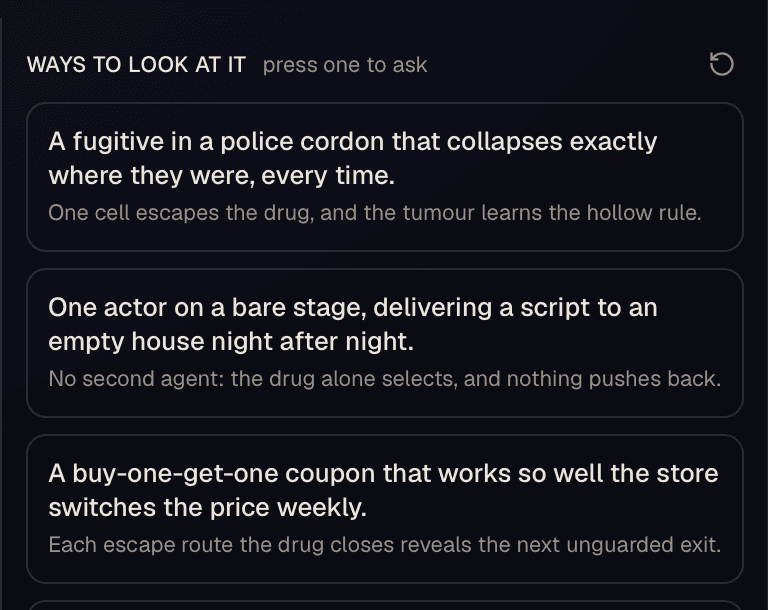
Parlium helps your creativity. It shows you the thing from angles you would not have tried, in the hope one of them breaks it open: your protein as a puppet master, for example.
Nothing you bring here gets graded.
One of two modes. The screen changes when you switch: this is what night looks like.
Day science
Rigour
The literature is what has already been done. Grants are what is being done now — work that will not appear as a paper for years.
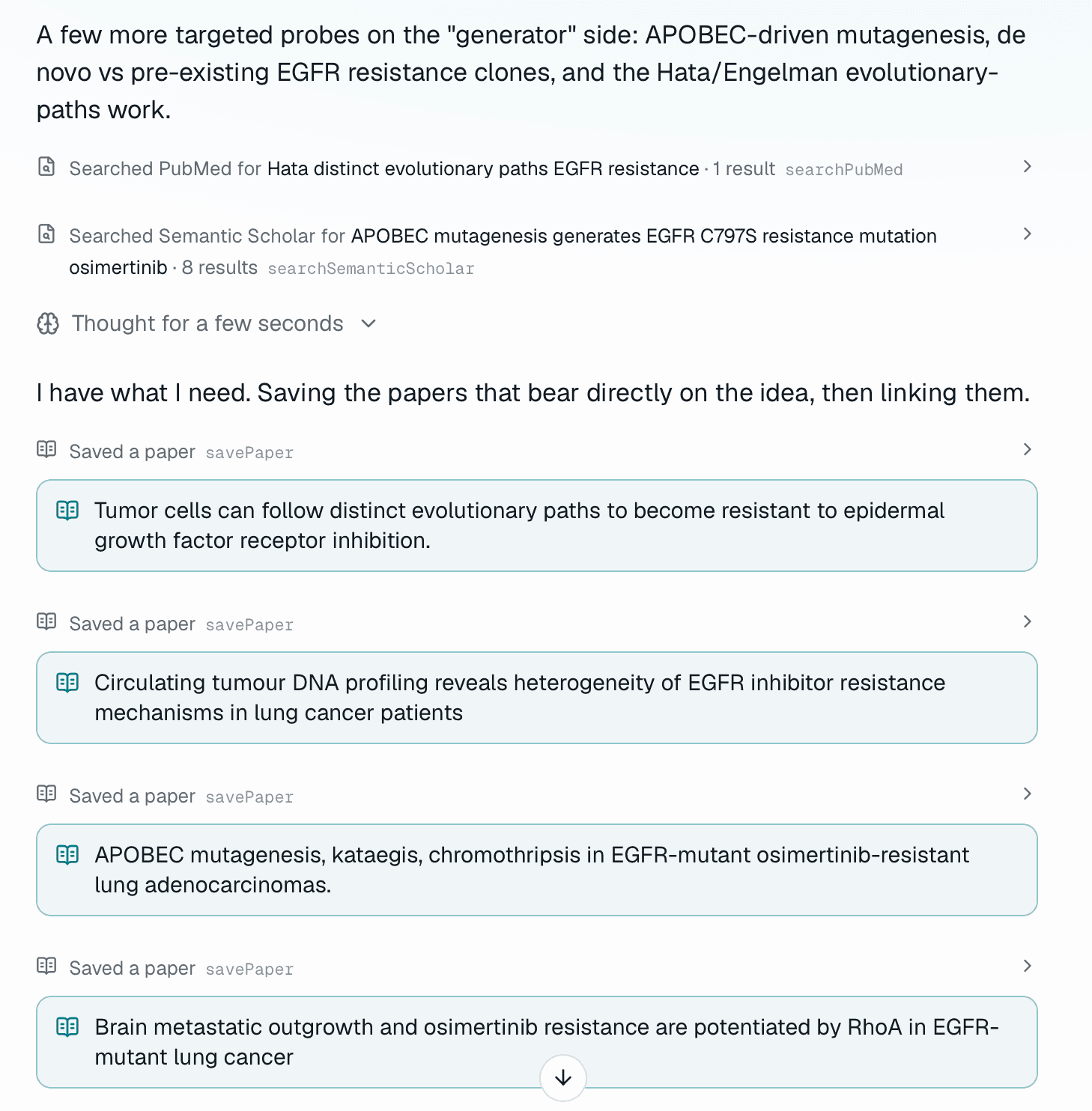
Parlium searches both: PubMed, Semantic Scholar and bioRxiv for papers; NIH, Wellcome, Cancer Research UK, the MRC, the ERC and forty more for awards.
And it joins the two up — what came out of this grant, and who is funded to work on this.
Already have a library? Import it from Zotero.
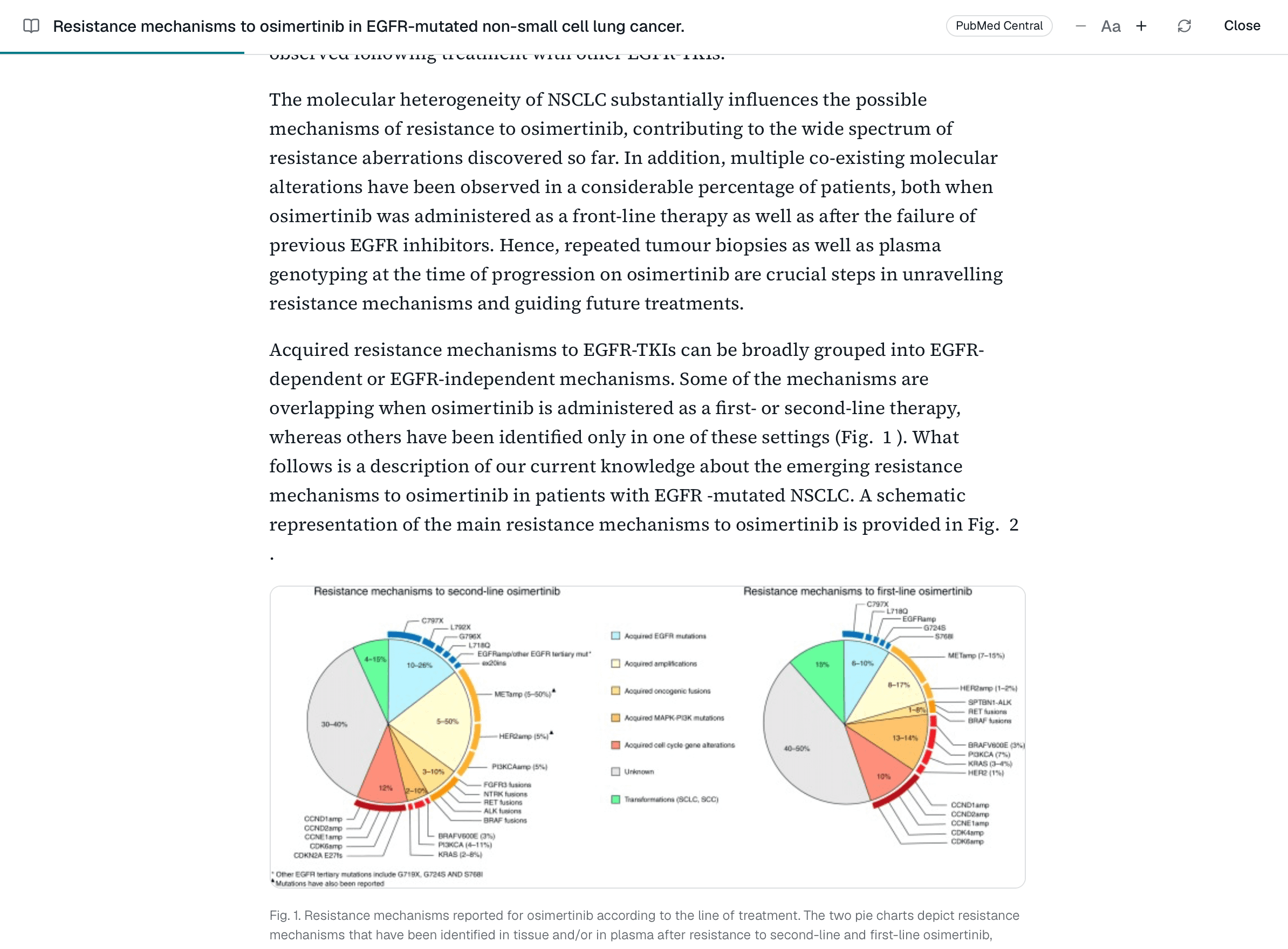
The paper, rebuilt to be read.
Not the publisher’s two-column PDF. Where there is an open-access copy, it takes the whole paper and rebuilds it as a single column — figures with their captions, tables still tables, equations still equations.
It opens full screen with nothing else on it, at whatever text size suits your eyes. Select a passage that strikes you and keep it as an idea.
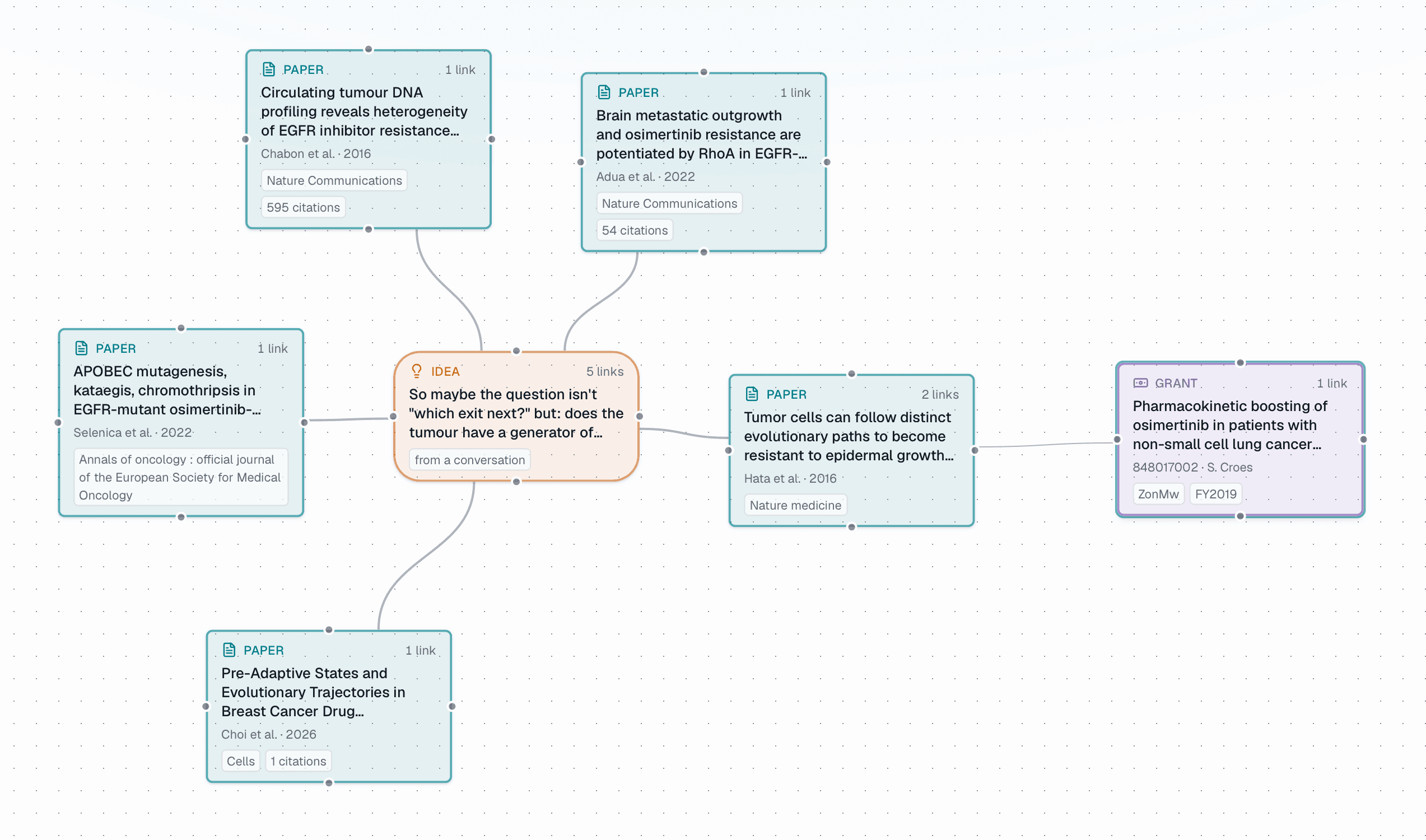
Not a chat log.
A hunch explored in night science can lead to an idea that is carried into day science and tested against the literature. What you find is kept with the idea — which papers support it, which ones argue against it, and why. It is all still there when you come back.
Parlium helps you think. It does not do your science.
Get started